The transmission is one of your vehicle’s most complex and expensive components—often costing between $4,000 and $8,000 to replace when it fails. Despite this, transmission maintenance frequently takes a backseat to more commonly discussed maintenance items like oil changes and brake service. This oversight can be costly, as proper transmission care can potentially double the lifespan of this critical component.
Whether your vehicle has an automatic, manual, or continuously variable transmission (CVT), understanding proper maintenance procedures and recognizing early warning signs of trouble can save you from the significant expense and inconvenience of major transmission repairs. By following essential maintenance guidelines and heeding early warning signs, you can potentially add years and tens of thousands of miles to your transmission’s service life while maintaining optimal vehicle performance and fuel efficiency.
Understanding Your Transmission Type
Different transmission types have unique maintenance requirements and potential issues:
Automatic Transmissions
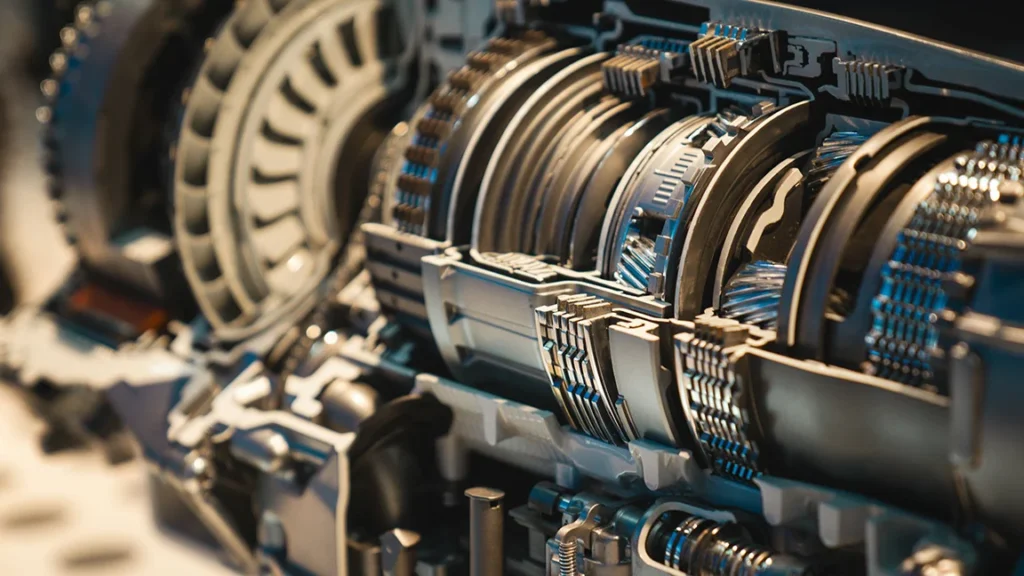
The most common type in modern vehicles, using hydraulic systems and planetary gearsets to shift gears automatically.
Key components:
- Torque converter
- Valve body
- Planetary gear sets
- Transmission fluid and filter
- Solenoids and sensors
- Clutch packs
Typical maintenance needs:
- Fluid and filter changes
- Computer module updates
- Adaptive learning procedures
Manual Transmissions
Requires driver input to physically select gears through a shift lever and clutch pedal.
Key components:
- Clutch disc and pressure plate
- Input and output shafts
- Synchronizers
- Gear sets
- Transmission fluid/oil
Typical maintenance needs:
- Fluid changes
- Clutch adjustments or replacement
- Linkage lubrication
Continuously Variable Transmissions (CVTs)
Uses belts or chains on pulleys to provide infinite gear ratios without distinct shift points.
Key components:
- Drive belt or chain
- Variable pulleys
- Hydraulic system
- Special CVT fluid
Typical maintenance needs:
- Specialized fluid changes (specific CVT fluid only)
- More frequent fluid maintenance intervals
- Control module updates
Dual-Clutch Transmissions (DCTs)
Combines elements of manual and automatic transmissions, using two clutches for odd and even gears.
Key components:
- Dual clutch assembly
- Automated shift mechanisms
- Electronic control unit
- Specialized fluid
Typical maintenance needs:
- Specific fluid requirements
- Clutch adaptation procedures
- Control module updates
Essential Transmission Maintenance Procedures
1. Transmission Fluid and Filter Service
The single most important maintenance procedure for any transmission is regular fluid service:
Automatic Transmission Fluid Service
Recommended interval:
- Every 30,000-60,000 miles for most vehicles
- Every 15,000-30,000 miles for severe service (towing, high temperatures, stop-and-go traffic)
- Follow manufacturer’s recommendations as a minimum guideline
Service options:
- Drain and fill: Removes only 30-40% of fluid but is gentler on older transmissions
- Flush: Removes 90-95% of fluid but may dislodge debris in high-mileage transmissions
- Filter replacement: Should accompany fluid changes when accessible (some transmissions have non-serviceable filters)
Manual Transmission Fluid Service
Recommended interval:
- Every 30,000-60,000 miles for most vehicles
- Some manufacturers claim “lifetime” fill, but experts typically recommend changes every 50,000 miles
Service considerations:
- Manual transmissions often use gear oil rather than automatic transmission fluid
- Specific viscosity and additive packages required per manufacturer specifications
- Some modern manual transmissions use dual-clutch transmission (DCT) fluid
CVT Fluid Service
Recommended interval:
- Every 30,000-50,000 miles (more frequent than conventional automatics)
- Some CVTs are particularly sensitive to fluid condition
Service considerations:
- Must use only specified CVT fluid (never substitute with regular ATF)
- Often requires specialized equipment for proper service
- May require specific fill procedures and level checking
2. Cooling System Maintenance
Many automatic transmissions rely on cooling via the vehicle’s radiator:
Maintenance procedures:
- Inspect transmission cooler lines for leaks or damage
- Ensure radiator is functioning properly (transmission fluid circulates through a section of the radiator)
- Consider auxiliary transmission cooler installation for towing or severe service
- Verify proper coolant level and condition (coolant system failures can affect transmission cooling)
3. External Component Service
Maintenance items:
- Inspect and replace mount bushings if worn
- Check for loose bolts and proper torque specifications
- Clean transmission case and pan of debris
- Inspect for external leaks and repair promptly
- Service linkage and cables on manual transmissions
4. Electronic System Maintenance
Modern transmissions rely heavily on electronic controls:
Maintenance considerations:
- Keep battery properly maintained (low voltage can affect transmission operation)
- Ensure all grounds are clean and tight
- Address check engine lights promptly (many transmission issues stem from sensor problems)
- Consider transmission control module updates if available
Manufacturer-Specific Maintenance Considerations
Different automakers have varying recommendations and known issues:
Ford/Lincoln Transmissions
- 6F35/6F50 series requires careful fluid selection (Mercon LV specific)
- 10-speed automatics benefit from adaptive learning resets after fluid service
- PowerShift DCT in Focus/Fiesta requires specific service procedures
GM/Chevrolet Transmissions
- 6L80/6L90 series prone to pressure control solenoid issues (fluid changes help)
- 8L45/8L90/10L90 may require valve body cleaning procedures
- Allison transmissions in trucks have specific filter service intervals
Toyota/Lexus Transmissions
- Many models require Toyota WS fluid only (no substitutes)
- World Standard (WS) fluid specified as “lifetime” but most specialists recommend 60,000-mile changes
- Aisin-manufactured units typically very reliable with proper fluid service
Honda/Acura Transmissions
- Requires Honda DW-1 or equivalent fluid (never substitute with non-Honda fluids)
- Some CVTs have specific warm-up procedures for fluid checking
- 9-speed ZF transmissions in newer models have computer adaptation procedures
European Vehicles (BMW, Mercedes, VW/Audi)
- Many specify “lifetime” fluids but specialists recommend 50,000-mile changes
- ZF transmissions (found in multiple brands) benefit from pan removal and filter changes
- DSG dual-clutch transmissions require specialized service equipment and procedures
Warning Signs of Transmission Problems
Early detection of transmission issues can prevent catastrophic failure. Watch for these warning signs:
Fluid-Related Warning Signs
- Burning odor: Overheated transmission fluid smells distinctly burnt
- Dark or discolored fluid: Healthy fluid is typically red or green; brown or black indicates degradation
- Metal particles in fluid: Indicates internal wear or damage
- Fluid leaks: Red or brown stains under the vehicle warrant investigation
Performance Warning Signs
- Delayed engagement when shifting from Park to Drive or Reverse
- Slipping: Engine revs up but vehicle doesn’t accelerate proportionally
- Hard shifts: Abnormally rough or jarring gear changes
- Hesitation before accelerating or when changing gears
- Unusual noises: Whining, buzzing, clunking, or grinding during shifting
- Unable to engage certain gears
- Transmission warning light on dashboard
When to Seek Professional Help
Consider professional evaluation if you experience:
- Any warning light related to the transmission
- Fluid that smells burnt or appears dark/discolored
- Consistent shifting problems (hard shifts, delays, slipping)
- Unusual noises coinciding with shifting
- Leaks from the transmission area
Advanced Transmission Maintenance Strategies
For Higher-Mileage Vehicles (Over 100,000 Miles)
- More frequent fluid changes: Consider 30,000-mile intervals instead of manufacturer recommendations
- Transmission additives: Certain friction modifiers or seal conditioners may be beneficial (use with caution and research specifically for your transmission)
- Driving habit adjustments: Allow longer warm-up periods in cold weather
- Cooling system upgrades: Auxiliary coolers can significantly extend transmission life
For Towing and Heavy-Duty Use
- Upgraded fluid: Consider synthetic transmission fluid with higher temperature tolerance
- Auxiliary cooling: External transmission cooler installation
- Temperature monitoring: Aftermarket gauge to monitor transmission temperature
- More frequent service intervals: Cut standard intervals by 30-50%
- Torque converter lockup controllers: Help reduce heat in towing applications
Preventative Additives and Treatments
Exercise caution with additives. Some can help while others may cause harm:
Generally considered beneficial:
- Seal conditioners for older transmissions with minor leaks
- Friction modifiers recommended by the manufacturer
- Detergent packages from reputable brands
Use with extreme caution or avoid:
- “Stop leak” products containing particles that can clog passages
- “Transmission fixes” claiming to repair slipping
- Additives not specifically formulated for your transmission type
DIY Transmission Maintenance Tips
Checking Transmission Fluid
For vehicles with dipsticks (becoming less common in newer models):
- Engine running (most vehicles) or off (check manufacturer procedures)
- Vehicle level on flat surface
- Warm fluid (drive 15-20 minutes to reach operating temperature)
- Correct dipstick interpretation:
- Check both sides of the dipstick
- Wipe, reinsert fully, and check again for accuracy
- Note both level and condition (color, smell, particles)
For vehicles without dipsticks:
- Locate the fill plug (often requires vehicle lift)
- Follow specific manufacturer procedures (many require scan tool measurement)
- Consider professional service when in doubt
DIY Fluid Change Procedure
For accessible transmissions:
- Warm up the transmission (drive 15-20 minutes)
- Locate and remove the drain plug or pan bolts
- Drain fluid into a suitable container
- Replace gasket or pan seal as required
- Install new filter if accessible
- Reinstall pan with proper torque sequence
- Add specified amount of correct fluid
- Check level following manufacturer procedure
- Test drive and recheck level
What Not to DIY
Certain procedures are best left to professionals:
- Complete transmission flushes requiring specialized equipment
- Internal transmission repairs
- Valve body removal or service
- Transmission computer programming or resets
- Pressure testing
Transmission Longevity by Vehicle Type
Understanding typical transmission lifespans can help set expectations:
Sedan/Passenger Cars
- Average lifespan: 150,000-200,000 miles with proper maintenance
- Common failure points: Solenoids, clutch packs, valve body issues
- Maintenance impact: Regular fluid changes can potentially extend life by 50,000+ miles
SUVs/Crossovers
- Average lifespan: 130,000-180,000 miles
- Common failure points: Overheating during hill climbing, torque converter issues
- Maintenance impact: Cooling upgrades particularly beneficial
Trucks/Towing Vehicles
- Average lifespan: 120,000-200,000 miles (highly dependent on use)
- Common failure points: Overheating, clutch pack wear from heavy loads
- Maintenance impact: Synthetic fluids and cooling upgrades can dramatically extend life
Performance/Luxury Vehicles
- Average lifespan: Highly variable (100,000-180,000 miles)
- Common failure points: Complex electronic controls, specialty components
- Maintenance impact: Manufacturer-specific procedures critical for longevity
The Cost Benefit of Preventative Maintenance
Consider these comparative costs:
- Regular transmission service (fluid and filter): $150-$400 every 30,000-60,000 miles
- Transmission repair (rebuilt valve body or solenoid pack): $1,000-$2,500
- Transmission replacement (remanufactured unit): $3,000-$7,000
- Transmission replacement (dealer unit with labor): $4,000-$10,000+
Example cost analysis over 180,000 miles:
- With minimal maintenance: Potential transmission replacement at 120,000 miles: $4,500+
- With proper maintenance: Five fluid services at $250 each = $1,250 total
Potential savings with proper maintenance: $3,250+
Save Thousands With Proactive Transmission Care
Your vehicle’s transmission is a marvel of engineering that performs countless operations every time you drive. With proper care and attention, this sophisticated component can provide reliable service for the life of your vehicle. Conversely, neglect can lead to premature failure and expensive repairs.
The most impactful maintenance strategy is simple: regular fluid services performed at or before manufacturer-recommended intervals, using the correct fluid specifications. Combined with attentive driving habits and prompt attention to early warning signs, this approach provides the best insurance against transmission problems.
Remember that “lifetime” fluid designations are primarily marketing terms rather than technical realities—all transmission fluid degrades over time and with use. By incorporating transmission maintenance into your vehicle care routine, you’re making an investment that typically returns many times its cost in extended service life and avoided repairs.
Schedule a transmission fluid assessment today if it’s been more than 30,000 miles since your last service or if you notice any of the warning signs described above. This simple preventative step could save you thousands in future repair costs and extend your vehicle’s useful service life.
Protect your transmission with expert service! Ian’s Auto in Broken Arrow specializes in transmission maintenance for all vehicle types—automatic, manual, CVT, and dual-clutch systems. Our transmission services include proper fluid selection, complete filter replacement, and comprehensive system inspection to catch small issues before they become major problems. Call (918) 251-5305 to schedule your transmission service and potentially save thousands on repair costs!