

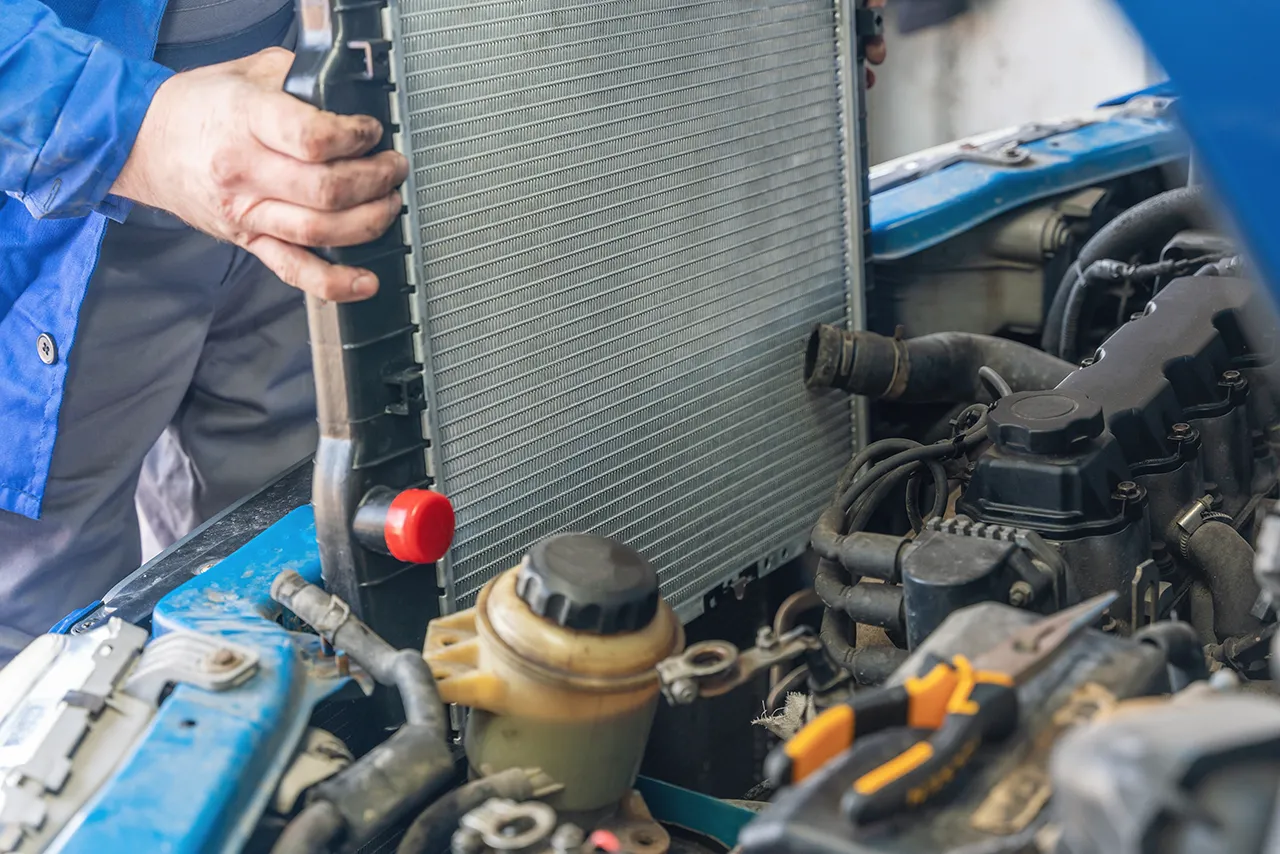
Your engine generates an enormous amount of heat — enough to destroy itself within minutes without a properly functioning cooling system. The radiator sits at the center of that system, pulling heat out of your coolant and releasing it into the air before the fluid cycles back through the engine. When it starts to fail, the consequences move fast.
Knowing when to replace a radiator — and when you can still buy a little time — is the kind of information that can save you from a roadside breakdown or a repair bill far larger than the radiator itself.
How Long Does a Radiator Last?
Most radiators last somewhere between 8 and 15 years, though the actual lifespan varies considerably based on vehicle type, driving habits, local climate, and how consistently the cooling system has been maintained. Some radiators reach 200,000 miles without issue. Others develop problems at 80,000. There’s no factory-scheduled interval for radiator replacement the way there is for spark plugs or brake fluid — it’s a component that’s replaced when it needs to be, not on a clock.
The material matters, too. Older vehicles were built with copper and brass radiators, which are more durable but also more expensive to repair. Most modern vehicles use aluminum cores with plastic end tanks. The aluminum core itself is generally long-lasting, but the plastic tanks and the seams where they attach to the core are common failure points — especially after years of heat cycling and exposure to degraded coolant.
Neglecting coolant flushes accelerates this deterioration significantly. Old coolant turns acidic over time and begins corroding the internal surfaces of the radiator, the water pump, and the heater core. Staying current on cooling system maintenance is genuinely one of the best things you can do to extend radiator life.
How Do You Know When You Need a New Radiator?
The radiator doesn’t usually fail all at once. It tends to give warning signs — and the ability to read those signs accurately is what separates a manageable repair from an engine-damaging crisis.
Coolant puddles under your vehicle are one of the most common early indicators. Coolant is typically bright green, orange, pink, or blue depending on the type — and it has a slightly sweet smell. A puddle under the front of your car after it’s been parked overnight shouldn’t be ignored.
Overheating is the symptom that demands immediate attention. If your temperature gauge climbs into the red, or if you see a warning light for engine temperature, pull over as soon as it’s safe to do so. Continuing to drive an overheating engine risks a blown head gasket, a warped cylinder head, or a cracked engine block — repairs that can cost several times more than a radiator replacement.
Discolored coolant is a subtler sign, but an important one. Coolant should be clear and brightly colored. If it looks brown, rusty, or murky when you check the reservoir, corrosion is already at work inside the system. That’s a signal to have the cooling system inspected before more expensive damage occurs.
Other signs to watch for:
- Visible cracks or damage to the radiator body or plastic end tanks
- A consistently low coolant level with no obvious external leak (can indicate an internal leak)
- Sludge or oily residue in the coolant reservoir, which may point to a transmission fluid leak into the radiator on vehicles with integrated transmission coolers
- A sweet burning smell coming from the engine compartment
None of these symptoms should be left to wait. The cooling system doesn’t offer a lot of margin for error.
How Long Can You Drive With a Radiator Leak?
Straightforwardly: you shouldn’t. A radiator leak — even a small one — allows coolant to escape faster than most drivers expect. Your engine can overheat within minutes of losing enough coolant, and an overheated engine can sustain permanent damage in that same window of time.
This isn’t a situation where driving carefully extends your options. The risk isn’t just getting stranded; it’s the possibility of a cracked block or blown head gasket that turns a $600 radiator replacement into a $3,000-plus engine repair. If you notice coolant loss or suspect a radiator leak, the right call is to stop driving and have the vehicle towed or inspected before continuing.
The one exception some technicians might mention is a very minor seep at low temperature — but even then, the appropriate response is to get it diagnosed quickly, not to keep running the vehicle and hope it holds.
How Much Does It Cost to Replace a Radiator?
Radiator replacement costs vary based on the vehicle’s make and model, whether the shop uses OEM or aftermarket parts, and local labor rates. For most passenger cars and crossovers, a complete radiator replacement — parts and labor combined — typically falls somewhere in the range of $300 to $900. Larger vehicles, luxury models, or vehicles with more complex cooling system configurations can run higher.
The cost range exists because there’s a real difference between radiator options. A budget aftermarket radiator may cost significantly less upfront, but OEM or OEM-equivalent parts are engineered to match your vehicle’s exact specifications and typically carry better warranties. For Honda and Acura owners in particular, using genuine Honda OEM parts means the radiator fits precisely, connects properly to factory hoses and mounts, and performs the way the engineers intended.
It’s worth asking your shop what parts they’re quoting so you understand exactly what you’re getting.
How Long Does It Take to Replace a Radiator?
For most vehicles, a radiator replacement takes approximately 2 to 4 hours of shop time. The process involves draining the coolant, disconnecting hoses, removing the old radiator, installing the new one, reconnecting the cooling system, refilling with fresh coolant, and pressure-testing to confirm there are no remaining leaks. Done properly, it’s a methodical job — not one that should be rushed.
Some vehicles require additional steps. On Honda and Acura models with a transmission oil cooler integrated into the radiator, the technician also needs to disconnect and reconnect transmission cooling lines, and transmission fluid levels should be checked afterward. More complex engine configurations or older vehicles with heavily corroded hardware can add time to the job.
A shop that’s familiar with your specific vehicle will have a much more accurate estimate than a generic quote — and they’ll flag any related items (like aging hoses or a worn thermostat) that make sense to address at the same time.
How Often Do Car Radiators Need to Be Replaced?
There’s no standard replacement interval for radiators. Unlike oil or brake pads, radiators are replaced based on condition, not mileage. Many drivers never replace the original radiator in a vehicle they own for 10 or 12 years. Others encounter problems earlier due to a collision, coolant neglect, or manufacturing variation.
What you can control is the maintenance that extends radiator life. Cooling system flushes at the intervals recommended by your manufacturer keep coolant chemistry in the right range and prevent the internal corrosion that shortens radiator lifespan. A visual inspection of hoses, the radiator cap, and the coolant reservoir during routine oil changes can catch early signs of wear before they become failures.
The goal isn’t to replace a radiator on a schedule — it’s to never be surprised by one that failed silently until the engine temperature gauge told you it was already too late.
Common Radiator Problems Beyond Leaks
Leaks get the most attention, but they’re not the only way a radiator can fail. Clogging is a significant issue on high-mileage vehicles, particularly when coolant flushes have been skipped. Sediment, scale, and corrosion byproducts accumulate inside the radiator tubes over time, restricting flow and reducing the system’s ability to shed heat efficiently. A clogged radiator can cause an engine to run consistently warmer than normal — never quite overheating, but never cooling the way it should.
Physical damage from road debris or minor collisions can bend the delicate cooling fins on the front face of the radiator. Bent fins reduce airflow, which reduces cooling capacity. In many cases this damage is visible without removing the radiator — but it’s also easy to overlook during a quick walk-around.
Finally, on vehicles where the automatic transmission cooling circuit runs through the radiator, a failure of the internal divider between the coolant and transmission fluid passages can allow the two fluids to mix. The result is typically a reddish-brown sludge in the coolant reservoir — and transmission damage that compounds quickly if the vehicle keeps being driven.
What Happens If You Ignore Radiator Problems?
The cooling system protects every other component in your engine. When it fails, the failure rarely stays contained to one part. An overheating engine puts immediate stress on head gaskets, which seal the combustion chambers and oil passages from the coolant passages. A blown head gasket allows coolant to enter the combustion chamber, oil passages, or both — causing white exhaust smoke, oil contamination, and progressively worse engine performance.
Beyond the head gasket, severe or prolonged overheating can warp aluminum cylinder heads. A warped head requires resurfacing at minimum, and in extreme cases replacement. By the time an engine has been run long enough to sustain that kind of damage, the original radiator replacement that would have prevented it looks like a bargain.
The pattern holds across nearly every cooling system failure: the earlier the diagnosis, the smaller the repair.
Getting a Diagnosis You Can Trust
The tricky part about radiator problems is that some of the symptoms — mild overheating, slightly low coolant, a subtle smell — can also point to other cooling system components. A failing water pump, a stuck thermostat, a cracked hose, or a compromised radiator cap can all produce overlapping symptoms. Proper diagnosis means pressure-testing the cooling system, inspecting for internal and external leaks, checking coolant condition, and evaluating the full picture before recommending a repair.
At Ian’s Auto Service, we’ve been diagnosing cooling system problems for Broken Arrow and Tulsa drivers since 1995. Our digital vehicle inspection system documents findings with detailed photos so you can see exactly what we see — no guesswork, no vague explanations. Whether your vehicle is a Honda Civic, an Acura MDX, or a Toyota Camry, our technicians bring the same methodical approach to identifying the root cause and presenting your options clearly.
Cooling system repairs done right the first time protect your engine, your schedule, and your budget. If something doesn’t seem right with how your car is running temperature-wise, don’t wait for the gauge to confirm it — reach out to our team and we’ll take a look.