

When a car is overheating, low coolant is one of the first things a technician checks — and for good reason. The cooling system depends on having enough fluid circulating at all times to pull heat away from the engine. When that fluid level drops, the system can’t do its job, and the engine temperature climbs in a hurry. Understanding why coolant gets low in the first place is usually what leads to actually solving the problem.
What Coolant Does and Why the Level Matters
Coolant — sometimes called antifreeze — flows continuously through the engine block and cylinder head, absorbing heat and carrying it to the radiator where it’s released before cycling back through. It also raises the boiling point of the fluid in summer, prevents freezing in winter, and contains corrosion inhibitors that protect the internal surfaces of the cooling system. When the level drops significantly, there’s simply not enough fluid to keep that heat transfer working efficiently. The engine starts running hotter than it should, and from there the situation can escalate quickly.
A low coolant level isn’t a problem that tends to stay manageable on its own. It gets worse until the underlying cause is addressed.
Why Is Your Coolant Level Low?
This is the question that matters most, because “low coolant” is a symptom, not a root cause. Figuring out why the level dropped is what determines the right repair.
Over a very long period of time — years, not weeks — trace coolant loss can occur through the overflow system and is considered within normal range. But if you’re checking the reservoir regularly and noticing a meaningful drop over days or a few months, that’s a leak. The distinction between an external leak and an internal one is important, because they point to very different repairs.
External leaks are the more straightforward scenario. Coolant has a distinctly sweet smell and typically leaves a brightly colored puddle — green, orange, pink, or blue depending on the type — under the front of the vehicle after it’s been parked. Common sources include a failing radiator, deteriorating hoses, a worn radiator cap that can no longer hold system pressure, a leaking water pump seal, or a compromised heater core. A pressure test at a shop can locate the source even when the leak is too slow to leave an obvious puddle.
Internal leaks are harder to detect and more serious. When a head gasket fails, coolant can enter the combustion chamber or oil passages without ever appearing on the ground. The level drops steadily with no visible source, which often confuses drivers who check underneath and see nothing. Other signs that an internal leak may be involved include white or gray exhaust smoke that persists after the engine fully warms up, a milky or foamy residue under the oil cap, or bubbling in the coolant reservoir. If those symptoms are present alongside consistently low coolant, that combination warrants prompt diagnosis.
What Happens When Coolant Gets Too Low?
Without adequate coolant circulating through the system, the engine overheats. That’s the direct consequence — and overheating is where the real damage begins. Heat builds faster than the radiator can release it, temperatures climb beyond what the engine’s components are designed to tolerate, and failures start to compound.
Head gaskets are among the first casualties. The extreme heat causes the aluminum cylinder head to expand at a different rate than the block beneath it, placing massive stress on the gasket seal. Cylinder heads can warp. In severe cases the block can crack. What starts as a coolant level problem can end as an engine rebuild conversation if the vehicle keeps getting driven through the warning signs.
Understanding why your car is overheating — and what to do when it happens — is the broader context this problem lives inside.
How to Check Your Coolant Level
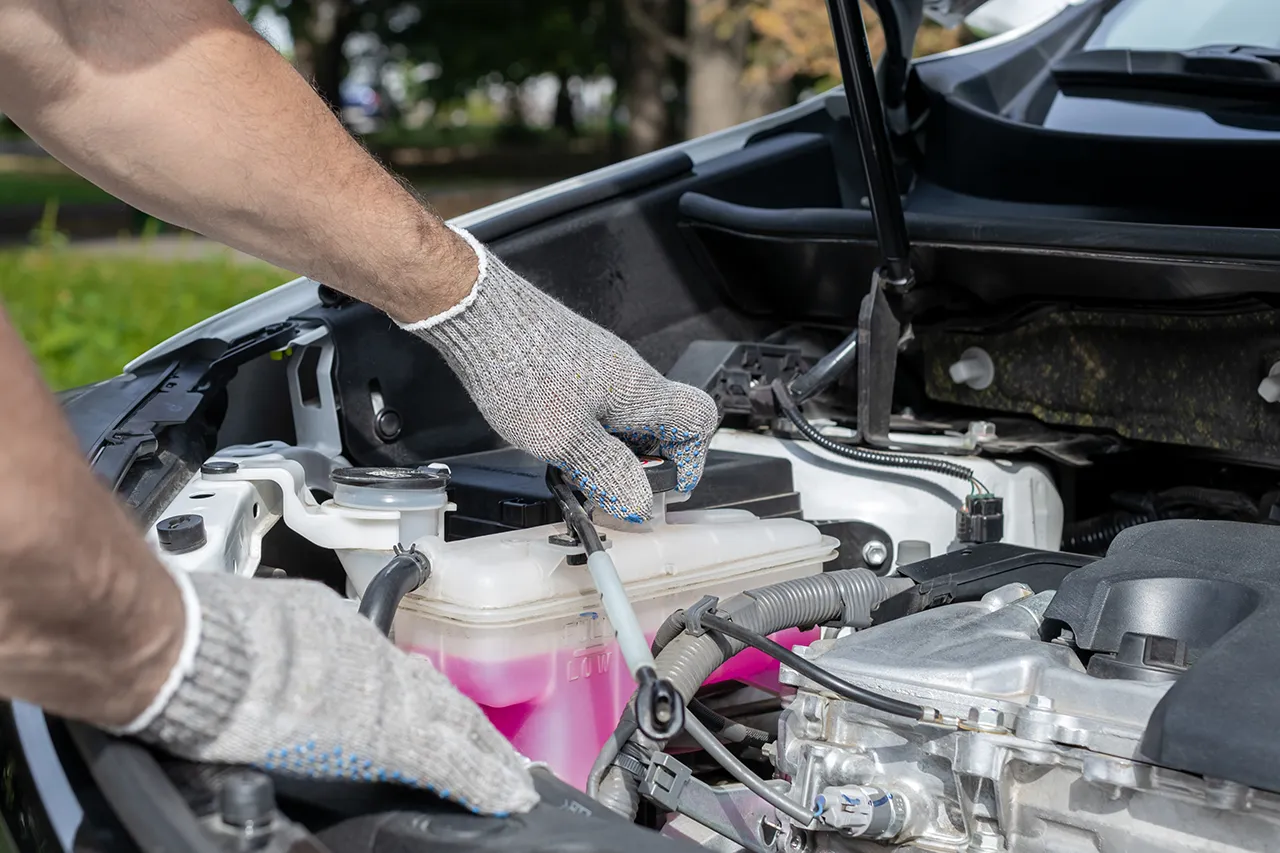
Most vehicles make this easy. With the engine cold — opening a pressurized cooling system on a hot engine is genuinely dangerous and should never be done — find the coolant reservoir, which is usually a translucent plastic tank near the radiator with MIN and MAX markings. The level should fall between those two lines. At or below the MIN mark means the system needs attention.
That MIN line isn’t a suggestion. Running the system at the low end of its capacity reduces the margin for error and puts the engine closer to heat stress than it needs to be.
How to Address Low Coolant
If the level is low and you need to top it off, use the correct coolant type for your specific vehicle — this matters more than many drivers realize, because different formulations use different corrosion inhibitor chemistry and mixing them can actually accelerate internal corrosion. Your owner’s manual will specify the right type. When in doubt, ask a technician rather than guessing.
Topping off the reservoir is a temporary measure, not a repair. If there’s a leak — internal or external — adding coolant without finding the source means you’ll be back in the same situation, likely with more damage along the way. The right follow-up to topping off is a proper inspection to determine why the level dropped.
Coolant Leaks: Why Finding the Source Matters
Small leaks don’t stay small. A minor seep at a hose connection grows as rubber ages and pressure cycles work on it. A weeping water pump seal becomes a failed water pump. The earlier a leak is caught, the simpler and less expensive it is to address.
A pressure test during a routine inspection can reveal leaks that haven’t yet produced obvious symptoms — no puddle, no warning light, just a slow and steady loss that gradually puts the cooling system at risk. If the coolant in the reservoir is discolored, rusty, or otherwise degraded rather than clean and bright, that’s a separate signal that the system needs a flush and that corrosion may already be affecting the internal components.
For drivers whose low coolant is accompanied by those symptoms, the possibility of a blown head gasket takes priority over everything else.
When to Pull Over and Call a Shop
If a coolant warning light comes on while you’re driving, treat it as an immediate concern. The same goes for a temperature gauge climbing toward the red, a sweet smell from the engine compartment, or steam rising from under the hood. Pull over when it’s safe, let the engine cool completely before touching anything under the hood, and have the vehicle inspected before driving it further. A tow is far less expensive than the repairs that follow from driving an overheating engine through those warning signs.
At Ian’s Auto Service, we’ve been diagnosing cooling system issues for Broken Arrow and Tulsa drivers since 1995. If your coolant level keeps dropping — or you’re not sure why it’s low — we can pressure-test the system, inspect for internal and external leaks, and give you a clear picture of what’s actually going on and what it takes to fix it.